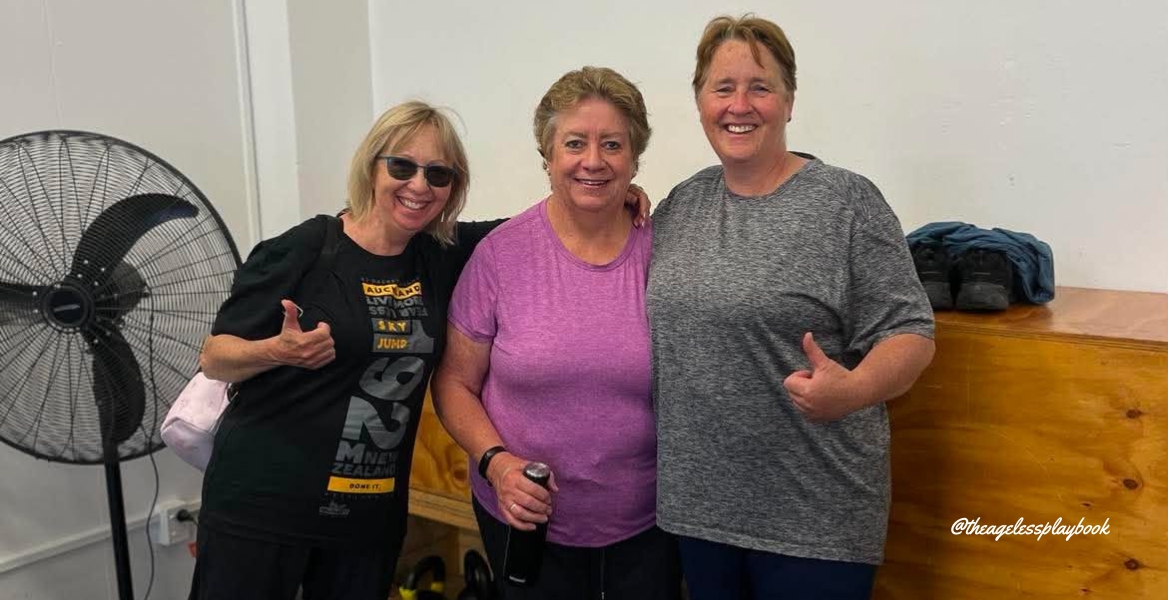
Last week ended with the coach standing in the room, the one actually deciding, session to session, how to serve a fit seventy-year-old and a detrained fifty-eight-year-old sitting side by side.
That's not a template decision.
It's a person decision, so this week is about the person.
Here's the test I actually use: if you wouldn't trust this coach with your own parents or grandparents, they shouldn't be coaching yours.
Everything else in hiring is downstream of that one question.
Employ for character; teach the skills after
The technical side of coaching a 50+ group can be taught in weeks.
- Loading progressions and regressions
- How to scale a session for someone with a hip replacement versus someone who's simply detrained
- How to spot the difference between muscle fatigue and something that needs a physio referral.
All of that is learnable, reasonably quickly, by anyone with the aptitude and the willingness to sit through it.
What isn't learnable in weeks, or in a course, or with another certification, is whether someone genuinely cares whether the person in front of them succeeds.
A potential client told me recently I was really good at the psychological side of coaching.
My honest reaction was that it sounded a little manipulative when he put it that way, because I don't think I'm doing anything psychological. I'm listening.
But the distinction underneath that conversation is the whole point of this lesson. I can teach anybody to coach. I can't teach them to care.
Where the gap actually shows up
Character isn't visible in a job interview, and it's rarely visible in someone's programming knowledge either. It shows up in the moments that don't go to plan.
A client misses three weeks because her mother's in hospital. Coach without character reaches for an explanation of how detraining works and why she needs to ease back in carefully. Coach with character says "we'll pick up where we left off, no apology needed," and means it.
Frustration at not being able to do what they could twenty years ago gets two different answers too. One coach explains the physiology of ageing, technically correct, entirely useless in that moment. The other recognises the frustration without immediately trying to fix it.
Then there's the client who turns up tired, clearly not having the day for it.
Motivating them into the session that was planned is one option.
Adjusting the session to meet the person who actually walked in, not the person on the programme sheet, is the other.
None of that requires a diploma. It requires someone who was paying attention to the human being, not just the training block.
Why this test works better than any résumé
Ask yourself the parents-and-grandparents question about a candidate, and you'll usually know the answer within the first real conversation, often before you've asked a single question about training philosophy.
It isn't warmth as a personality trait; plenty of warm people are terrible coaches.
It's whether they treat the person in front of them as someone's whole life, with a family and a history and a bad week sometimes, rather than as a body that needs reps done to it.
The certification gets a candidate through your door and gets them the first session with a client. It's a genuinely useful filter; don't skip it. Technical competence matters and clients deserve coaches who know what they're doing physically.
But it isn't what keeps that client for three years.
Character does that, and character is either present when you meet someone, or it isn't.
You're not going to install it with a course, however good the course is.
Where this leaves you
Next time you're hiring for a 50+ programme, run the résumé and the certifications past whatever bar you've already set; that part hasn't changed.
Then ask the question that actually matters: would I hand my own mother to this person for an hour, three times a week, and trust she'd be looked after, not just competently trained.
Yes, and you can teach the rest.
No……and no amount of continuing education closes that gap.
You'll be having this same conversation about them again in six months, once the cracks show up with a client instead of with you.
Next week: what actually keeps clients once you've got the right coach in the room, and why it's got almost nothing to do with the programming.
Cheers!
Paul
(If you're refining how you screen for this before someone's even in front of a client, the First Conversation Workbook includes the questions we actually use to surface character early, before it becomes a six-month problem instead of a hiring decision.)